Warning: Undefined array key 1 in /home/yogindar/www/blog/wp-content/plugins/visitors-online/visitors-online.php on line 505
Warning: Undefined array key 2 in /home/yogindar/www/blog/wp-content/plugins/visitors-online/visitors-online.php on line 505
Warning: Cannot modify header information - headers already sent by (output started at /home/yogindar/www/blog/wp-content/plugins/visitors-online/visitors-online.php:505) in /home/yogindar/www/blog/wp-content/plugins/visitors-online/visitors-online.php on line 557 Geopolitics – Technical Articles
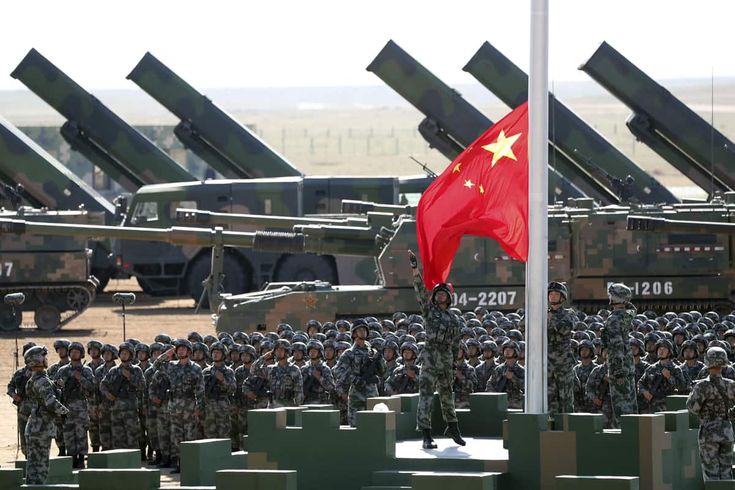
Although the People’s Republic of China has never ruled Taiwan, its leaders view the island as Chinese territory—a renegade province that must be brought under Beijing’s control, by force if necessary.
It would be foolish to ignore China’s provocations, for several reasons. With this much hostile hardware moving through narrow lanes of air and water, accidents can happen, and any incident that increases the risk of direct armed conflict between the two most powerful countries on Earth must be taken seriously. Second, China’s maneuvers amount to a rehearsal. Though China will not show Taiwan, the U.S., or anyone else exactly how it would launch a full blockade or invasion of Taiwan, China’s armed forces find it very valuable to practice. After all, Chinese troops haven’t faced a shooting war since a brief conflict with Vietnam in 1979. Finally, Taiwan will hold national elections next year. Though China’s latest intimidation may not lead to military conflict anytime soon, it may have an effect on how Taiwan’s voters imagine the future.
All that said, the actual risk of imminent Chinese military action against Taiwan remains low. Beijing always flexes military muscle when highest-level U.S. and Taiwanese officials meet face to face. Yet, though Speaker McCarthy’s visit with Taiwan’s president marks the highest-level U.S.-Taiwan meeting on US soil since 1979, China’s latest response was less militarily threatening than its reaction to last summer’s visit to Taiwan by then-Speaker Nancy Pelosi – and Beijing is well aware that Washington will notice that.
More importantly, Xi is spending considerable energy these days on playing a larger role on the global stage, particularly as a peacemaker. He has offered a 12-point peace plan for Ukraine he hopes will encourage others to see China as a global mediator, even if this particular plan has no chance of success. This past weekend, Xi welcomed French President Emmanuel Macron and European Commission Chairman Ursula Von der Leyen to Beijing for discussion of the Ukraine war and the future of China’s relations with Europe more broadly. Though Xi didn’t promise his European guests to lean harder on Russia, the Chinese and French governments issued a joint statement pledging they would work together to bring Russian and Ukrainian negotiators to the bargaining table.
This follows the remarkable visit to China of the foreign ministers of Middle East rivals Iran and Saudi Arabia, where they agreed under China’s mediation to improve their historically contentious relationship. Most importantly, just days ago, Taiwan’s former president Ma Ying-jeou became the first current or former Taiwanese leader to visit the mainland since Taiwan broke away in 1949, and during his visit he spoke of the “common inheritance of blood, language, history and culture” between the two sides, raising hopes in Beijing that reunification can still be achieved without risking a potentially catastrophic conflict. In short, Xi Jinping wants to be (at least perceived as) a peacemaker, and though Taiwan’s future remains of far more importance to him that any of these issues, China’s president is unlikely to reverse all these diplomatic victories by stumbling into a costly war.
There are more basic reasons why China is unlikely to move against Taiwan soon. Xi has watched carefully as Russia’s President Vladimir Putin has provided a vivid demonstration of just how unpredictable, costly, and humiliating an ill-conceived war can be. Taiwan, backed with generations of sophisticated and powerful American weapons, has been preparing for a possible Chinese invasion even longer than Ukraine has prepped for a full-frontal assault from Russia, and given the complete lack of Chinese combat experience over the past 44 years, Xi understands that the risks of Pyrrhic victory – or even of defeat – are real. At a time when China is emerging from the world’s most draconian lockdown and its worst economic slowdown in decades, Xi is likely to be extra careful about the fights he picks. At least for now.
There’s also the critical issue of semiconductors. About 90 percent of the world’s most sophisticated computer chips are made in Taiwan. Aware of the risk this creates, China, the U.S., and others are working as quickly as possible to lessen the risk of economic catastrophe that would result if that production were dramatically slowed or even halted, but self-sufficiency in chip production is years away for every country. China is loath to risk conflict that would leave its economy without access to the 21st century’s most important economic resource.
One day, China may invade Taiwan, triggering a war with global implications. But that day isn’t soon. When and if it does, the timing will be determined by China’s leader, not as the result of any diplomatic provocation, but by his own calculation of benefit and cost. For now, it’s still possible to hope that cooler heads can one day find a diplomatic solution to avert a war that would have disastrous implications far beyond Asia.
China officially ended its live-fire military exercises around Taiwan this week, but its Taiwan Affairs Office has issued a white paper emphasizing “peaceful reunification” with the self-ruled island—while reserving the right to use force. It looks like dramatic escalation in response to U.S. House Speaker Nancy Pelosi’s visit to Taiwan can be ruled out, even as aggressive Chinese intrusions across the median line in the Taiwan Strait become the new normal.
In the aftermath of Pelosi’s visit, it’s worth considering just why China doesn’t invade Taiwan, despite near-constant threats to do so. There are a few factors that keep things from kicking off in the Taiwan Strait.
First, there is China’s hope that Taiwan will return to the mainland without war. Polls in Taiwan make that seem like a fantasy: Just 2 percent of Taiwanese identify solely as Chinese, a figure that has fallen from 25 percent a decade ago, thanks to generational change and Beijing’s aggression and crackdowns on human rights. Most of the Taiwanese public holds negative views of the Chinese Communist Party (CCP), and Beijing’s destruction of legal freedoms in Hong Kong turned the “one-country, two systems” principle into a joke.
But it’s possible that Chinese leaders have convinced themselves Taiwan’s return might happen: The white paper paints the Taiwanese public as deceived by the ruling Democratic Progressive Party and the West, and China’s ambassador to Australia has said the polls are misleading. Chinese officials lie about their own system so regularly, they assume that others do the same. Furthermore, the Taiwan Affairs Office also can’t be honest even internally about its own failure to woo Taiwanese to the idea of reunification, because it would expose itself.
Perhaps more likely: The CCP leadership thinks it may be able to force Taiwan to surrender through coercion and subversion rather than outright war. The CCP has spent a lot of time and money building ties with groups in Taiwan, from the once-ruling Kuomintang to organized crime. As I argued last week, Chinese leaders also hold out for the possibility of U.S. collapse, leaving Taiwan without its main protector.
Even if Beijing rules out peaceful reunification, the risks that would accompany an invasion are very high. There is no guarantee of Chinese success if it invades Taiwan, even without direct U.S. intervention. China hasn’t fought an actual war for 43 years, since its failed invasion of Vietnam in 1979; although it has invested heavily in its military, it has had no opportunity to test its doctrine or technologies.
Despite Chinese claims that an invasion would be quick and easy, it would be an amphibious attack of an unprecedented scale against a Taiwanese opponent that has prepared for the scenario for decades—even if it faces its own morale and logistical problems.
Then there are the geopolitical risks of an invasion, most importantly the possibility of full-scale war with the United States. On the one hand, a faction within Chinese military academia genuinely believes invading Taiwan could demonstrate superior will and push the United States out of the Asia-Pacific region. There are certainly questions about how willing Washington would be to go to war and if it could defend Taiwan.
On the other, no one in Beijing wants to suffer a humiliating defeat at the hands of the world’s most powerful military—or for the world to end in nuclear flames.
Putting the United States aside, an invasion of Taiwan would destroy China’s claims that it is a peaceful power—and with them Beijing’s relations with Tokyo, which has strong ties to Taipei. At least at first, a conquered Taiwan could not be sealed off from the world like Tibet or Xinjiang, where atrocities can remain somewhat hidden. Even if China cut off Taiwan’s internet, the island is high-tech enough to get out images of war or occupation that would damage China’s reputation.
Relatedly, an invasion could be followed by an economic recession at home. Southern China’s economy is entangled with Taiwanese suppliers and capital, which would be ruined by a war. Technology firms such as Taiwan Semiconductor Manufacturing Co. have scorched-earth plans in place for their factories in the event of an invasion, and talent would flee wherever possible. The West’s financial muscle exerted over Russia’s war in Ukraine has also caused concern in Beijing, even though extensive sanctions on China would cause much more damage to the global economy.
Finally—and perhaps most potent—is the political risk of invading Taiwan.
The Islamic State of Iraq and al-Sham (ISIS) is an organization that was formed in 2013 when Abu Bakr al-Baghdadi, the leader of al-Qaida’s Iraqi branch, merged with al-Qaida’s Syrian franchise. At its peak in 2014, ISIS controlled a large portion of Syria and Iraq, including government resources, industry, commerce, and agriculture. By December 2017, ISIS had lost 95% of its territory, including Mosul and Raqqa. In March 2019, ISIS was forced out of the last of its territory in Syria and Iraq
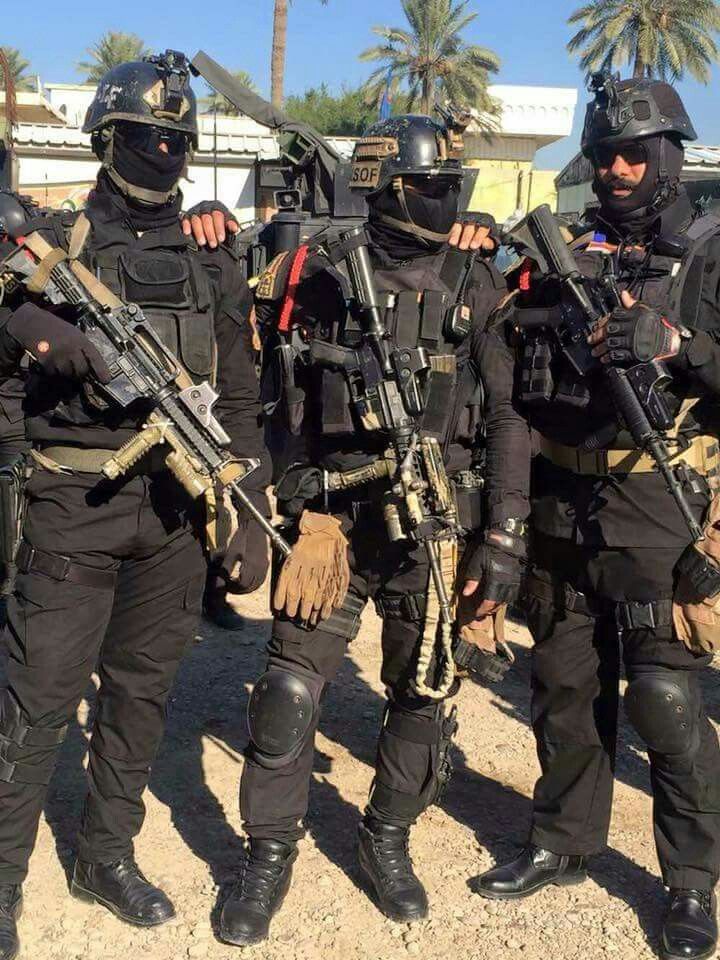
Iraqi special forces in mosul after capturing mosul from islamic state(ISIS) (ISIL)
THE RISE OF ISIS
The Islamic State – also known as ISIS, ISIL, or Daesh – emerged from the remnants of al Qaeda in Iraq (AQI), a local offshoot of al Qaeda founded by Abu Musab al Zarqawi in 2004. It faded into obscurity for several years after the surge of U.S. troops to Iraq in 2007. But it began to reemerge in 2011. Over the next few years, it took advantage of growing instability in Iraq and Syria to carry out attacks and bolster its ranks.
The group changed its name to the Islamic State of Iraq and Syria (ISIS) in 2013. ISIS launched an offensive on Mosul and Tikrit in June 2014. On June 29, ISIS leader Abu Bakr al Baghdadi announced the formation of a caliphate stretching from Aleppo in Syria to Diyala in Iraq, and renamed the group the Islamic State.
A U.S.-led coalition began airstrikes against ISIS in Iraq on August 7, 2014, and expanded the campaign to Syria the following month. On October 15, the United States named the campaign “Operation Inherent Resolve.” Over the next year, the United States conducted more than 8,000 airstrikes in Iraq and Syria. ISIS suffered key losses along Syria’s border with Turkey, and by the end of 2015, Iraqi forces had made progress in recapturing Ramadi. But in Syria, ISIS made gains near Aleppo, and still firmly held Raqqa and other strongholds.
In 2015, ISIS expanded into a network of affiliates in at least eight other countries. Its branches, supporters, and affiliates increasingly carried out attacks beyond the borders of its so-called caliphate. In October, ISIS’s Egypt affiliate bombed a Russian airplane, killing 224 people. On November 13, 130 people were killed and more than 300 injured in a series of coordinated attacks in Paris. And in June 2016, a gunman who pledged support to ISIS killed at least four dozen people at a nightclub in Orlando, Florida.
Basil Zamo † (1st Coastal Division chief of staff)[68] Abu Yahia al-Hamawi[69] (Leader of Ahrar al-Sham) Nimr Al-Shukri † (Top military commander of Ahrar al-Sham)[70] Zahran Alloush† (emir of Jaysh al-Islam) Abu Rida al-Turkistani † (Leader of TIP)[71] Abu Mohammad al-Julani (Emir of Tahrir al-Sham) Abdullah al-Muhaysini (Top sharia judge of the Army of Conquest and later a senior member of Tahrir al-Sham) Abu Jaber (Second Emir of Ahrar al-Sham, First Emir and current Shura head of Tahrir al-Sham) Salahuddin Shishani † (Former al-Nusra Front commander and current Tahrir al-Sham top military commander)[72] Abu Salman al-Belarusi (Abu Rofiq) † (Leader of Malhama Tactical)[73] Abu Ubeidah al-Kansafra † (Top military commander of Tahrir al-Sham)[74][unreliable source?] 12 unknown military commanders †[75]
“Mohammed Emwazi”[3] “John the Beatle”[4] “Jailer John”[5] Abu Abdullah al-Britani[6] Abu Muharib al-Yemeni[7] Mohammed al-Ayan[8] Muhammad ibn Muazzam[9] Mohammed Al-Zuhary[10] Abu Muharib al-Muhajir[11] Jihadi John[3]
Mohammed Emwazi (born Muhammad Jassim Abdulkarim Olayan al-Dhafiri; Arabic: محمد جاسم عبد الكريم عليان الظفيري; 17 August 1988 – 12 November 2015) was a British militant of Kuwaiti origin seen in several videos produced by the Islamist extremist group Islamic State (IS) showing the beheadings of a number of captives in 2014 and 2015. A group of his hostages nicknamed him “John” since he was part of a four-person terrorist cell with English accents whom they called ‘The Beatles‘; the press later began calling him “Jihadi John“.[3]
On 12 November 2015, United States officials reported that Emwazi had been hit by a drone strike in Raqqa, Syria.[16] His death was confirmed by IS in January 2016.[11]
Emwazi was born Muhammad Jassim Abdulkarim Olayan al-Dhafiri[17] on 17 August 1988 in Kuwait[1] as the eldest of five children[18] to Jassem and Ghaneyah Emwazi.[15] The family, who were Bidoon of Iraqi origin,[15] lived in the Taima area of the town of Al Jahra, which was known as a “slumtown” where stateless people were ghettoized by the Kuwaiti government.[19] They were undocumented, considered stateless and without Kuwaiti citizenship status.[19] The family moved to the United Kingdom in 1994 when he was six.[20] They settled in inner west London, moving between several properties in Maida Vale,[18] later living in St John’s Wood and finally in Queen’s Park.[18][21] Emwazi attended St Mary Magdalene Church of England primary school, and later Quintin Kynaston School.[22]
Emwazi was given the nickname “John” by a group of his hostages. The hostages said that he guarded Western hostages while handling communications with their families, and was part of a terrorist cell they called ‘The Beatles‘ because the cell members all had British accents.[23] The nickname refers to John Lennon of the Beatles; the three other group members were each given the first name of one of the other Beatles.
The nicknames “Jihadi John”, “Jailer John” and “John the Beatle” were created by journalists.[3] “Jihadi John” was used on 20 August 2014 in the conservative magazine The Spectator in a piece titled “Jihadi John – a very British export” by Douglas Murray, a frequent critic of Islam,[24] and soon after joined by the BBC and other sources.[25]
In a video uploaded to YouTube on 19 August 2014, Foley read a prepared statement criticising the United States, the recent airstrikes in Iraq, and his brother who serves in the US Air Force.[26] Emwazi, wearing a mask, also read a prepared statement in which he criticised US and President Barack Obama and made demands to cease the 2014 American-led intervention in Iraq.[26] The masked man then beheaded Foley off-camera, after which he threatened to behead Steven Sotloff if his demands were not met.[27] The FBI and US National Security Council confirmed that the video, which included footage of Foley’s beheaded corpse, was genuine.[26]
On 12 November 2015, two United States drone aircraft[88] along with a British drone conducted an airstrike in Raqqa that targeted Emwazi as he left a building and entered a vehicle.[89] US officials stated he had been killed,[90] and a senior US military official was quoted as saying, “we are 99% sure we got him.”[88] A US official called it a “flawless” and “clean hit” with no collateral damage and that Emwazi was “evaporated.”[90] On 14 December 2015, US President Barack Obama stated Emwazi had been “taken out”.[91]
UK Prime Minister, David Cameron, stated the UK and the US had been working “hand in glove, round the clock” to track Emwazi’s location, and that the drone strike was “an act of self-defence.”[16][92]
On 19 January 2016, in the IS magazine Dabiq, the group confirmed that Emwazi had been killed by a drone strike in Raqqa.[93] The obituary showed him unmasked and referred to him as Abu Muharib al-Muhajir.[11][94] Further photographs showing him unmasked in Syria were released on 26 January 2016.[95]
FALL OF ISIS
The Islamic State of Iraq and al-Sham (ISIS) lost control of all of its Middle Eastern territories by 2019. In March 2019, the Syrian Democratic Forces (SDF) and the U.S.-led Global Coalition took control of Al-Baghouz, the last stronghold of ISIS in Syria. On March 23, 2019, Baghouz fell, formally ending ISIS’s claim to any territory
Although losing its territories in iraq and syria ISIS is still capable of combat operations on iraqi government forces.
Overall 20% land lost by Ukraine. 80% in Luhansk and 50% in Donetsk. More damage happening to Ukraine due to lack of long range weapons. US and allies now trying to balance the war with long range weapons. War is now concentrated over Severodonetsk. Remaining major Luhansk city. The winning strategy in this war is not on how many weapons or soldiers lost, its how much land and infrastructure you lost.
Possible Outcomes(More likely to less likely)
Russia may decide to stop the war after capturing Severodonetsk and decide to hold on the 20%. War will continue under the hood like how it was from 2014 to 2021. Once the long range weapons are delivered to Ukraine, Ukraine will have the upper hand to create a stalemate in Donbas. Next possible solution to end the war for Russia is threatening to the use of tactical nuclear weapons or chinese invasion on Taiwan. As all of us knows US cannot share nuclear weapons to Ukraine.
Putin thrown out. I doubt it will not happen as foreign media claims. Putin is converting the economic sanctions to gains. More over world and Russian people knows the involvement of NATO in the war and the period of 1990 – 2008 how some countries were destroyed by NATO. Majority of Russians may consider Putin as their savior.
Phase 2 to continue for few more months/years and the entire Donbas is captured. Less likely. I doubt Russia will repeat Afghanistan in Ukraine.
Other possible areas of development
Ukraine may launch a full offense on Kherson.
What needs to be filtered from media
Media shows only Ukraine hitting with pin point accuracy. Russia using conventional ways. What we see is only one side of the war. Most of the Russian media propoganda remains inside Russia. The way Russia attack is to cover all 3 sides and capture the supply lines and then capture them as a whole. Since technology is advanced Ukraine soldiers are able to escape on timely manner. Within one month of war the propoganda was talking about Russia out of ammunitions. Russia is just capturing Ukraine ammunitions and handing over to soldiers in Donbas and not deperate on ammunitions. I see the Russian strategy of leaving Kiev and holding on to Donbas is working well. The Russian declaration of ending the war is nearby.
The war is going to a critical phase. Russia retreated after the culminating point(40 days). There is a change in strategy to concentrate on offense in Donbas while defending in the south. The crux of the Russia-Ukraine war is Donbas. NATO was providing lot of weapons from 2014, which Ukraine was using in Donbas. I guess Russia is now concerned about defending the south and trying to take full control of Donbas. The Russian retreat still looks fishy. There is something more damage planned on Kyiv. This may cause the war to enter more deadly phase with NATO getting more weapons to Ukraine and hitting Russian position inside Russia. Russia can create a fake chemical attack and nuke the Kyiv to bring the war under their control and to make NATO go one step back.
Last week Russia said they will lessen the attacks on Kyiv and Chernihiv. This week Russian troops retreat, so it was a deception attack or to frighten Ukraine. They could have done heavy bombing on Kyiv, but the attacks were less other than some show off. There was genocide on Bucha area. Most I believe due to heavy fighting. There are instances of purposeful killing civilians too which Russia denies. Possibly they might have challenged the Russian soldiers. Russia has setup mines to make the recovery more difficult to Ukraine. To me Russia has changed its strategy on Kyiv. I suspect they are plannig for more devastating attack as one of their major goal of removing Zelensky is not achieved. I suspect with Russian forces retreated, the Kyiv is wide open for a chemical, biological or tactical nuclear strike. Russia knows they need to sacrifice a lot of troops and equipment’s for capturing Kyiv. So I presume this is a tactical move by Russia. A potential Russian strike on Russian army or city with chemical weapons by Russia, claiming Ukraine attack and a nuclear response strike is a possible chance to end the war in favor of Russia.


 Jabhat Fath al-Sham (2016–2017)


 Basil Zamo
 Abu Rida al-Turkistani


