Month: July 2026

Practical AI: Pattern Recognition

Pattern recognition is when AI finds repeated signals in data and uses them to make useful guesses.

Examples:

Your phone recognizes your face by detecting patterns in facial features.

A music app recommends songs by noticing patterns in what you listen to.

A map app predicts traffic by finding patterns in travel speed, time, and location.

In simple words, pattern recognition helps AI answer:

“What is repeating here, and what does it suggest?”

Apply it today

Use pattern recognition to improve your energy and productivity.

At the end of the day, write down:

TimeActivityEnergy Level
MorningMeetings / focused work / exerciseHigh / Medium / Low
AfternoonCalls / emails / errandsHigh / Medium / Low
EveningLearning / family / restHigh / Medium / Low

After 3–5 days, look for patterns.

Example:

“I have high energy in the morning, but low energy after lunch.”

Then use that pattern:

Put difficult work in the morning and simple tasks after lunch.

Try this prompt

“Here is my energy log for the last few days: [paste notes]. Find patterns and suggest the best time for focused work, meetings, exercise, and learning.”

Pattern recognition is powerful because it helps you make better decisions from your own daily habits, not just guesses.

Practical Session

“Here is my energy log for the last few days: 7/14
Morning|Focussed Work|High Energy
After Noon|Meeting|Low Energy
Evening|Family|Medium Energy
7/15
Morning|Family|High Energy
After Noon|Family|High Energy
Evening|Family|High Energy
7/16
Morning|Meeting|Low Energy
After Noon|Meeting|Low Energy
Evening|Family|High Energy
. Find patterns and suggest the best time for focused work, meetings, exercise, and learning.”

Your energy pattern shows a clear trend:

TimePatternBest Use
MorningUsually high energy, except when packed with meetingsBest for focused work and important thinking tasks
AfternoonLow energy when meetings happen; high only when family/non-work dayBest for meetings, admin, follow-ups
EveningOften high or medium energy, especially family timeBest for learning, light planning, family, or exercise

Patterns I noticed

1. Meetings are draining your energy.

On both 7/14 and 7/16, afternoon meetings were marked Low Energy. Morning meeting on 7/16 was also Low Energy.

2. Family time seems energizing for you.

On 7/15, all family slots were High Energy. On 7/16 evening, family time was also High Energy.

3. Your best work energy appears in the morning.

The only focused work entry, 7/14 morning, was High Energy. This suggests mornings are your best deep-work window.

Best schedule suggestion

ActivityBest TimeReason
Focused workMorningHighest chance of strong concentration and energy
MeetingsAfternoonMeetings reduce energy, so avoid using your best morning slot for them
ExerciseEvening or early morningEvening energy is often high; early morning works if you want to protect evenings for family
LearningEveningGood for AI/Swedish learning because your evening energy is usually medium to high

Recommended daily rhythm

Morning: Deep work, urgent technical reviews, PR analysis, design thinking
Afternoon: Meetings, status updates, follow-ups, lower-focus tasks
Evening: Family, learning, light exercise, reflection/planning

For you, the best focused-work block looks like morning before meetings start. Try to protect at least 60–90 minutes every morning for high-value work.
Practical AI: Classification

Classification is when AI sorts information into categories.

Examples:

An email app classifies messages as important, promotion, spam, or social.

A photo app classifies pictures as people, food, documents, or travel.

A shopping app classifies your interests based on what you view or buy.

In simple words, classification helps AI answer:

“Which group does this belong to?”

Apply it today

Use classification to organize your daily tasks.Take your to-do list and sort each task into one of these categories:

CategoryMeaning
UrgentMust be done today
ImportantHelps long-term goals
QuickCan be done in 5–10 minutes
WaitingNeeds someone else’s response
LearningHelps you improve a skill

Example:

TaskCategory
Reply to manager’s emailUrgent
Study AI for 20 minutesLearning
Review project planImportant
Pay electricity billQuick
Wait for approvalWaiting

Try this prompt

“Classify my tasks into Urgent, Important, Quick, Waiting, and Learning. Then tell me which 3 tasks I should do first.”

Classification is useful because it reduces confusion. Instead of looking at a long list, you see clear groups and can act faster.

Practical AI: Prompting

Prompting means giving clear instructions to an AI system so it can produce a useful answer. The better your prompt, the better the response.

A simple prompt usually has three parts:

Role + Task + Context

Example:

“Act like a personal productivity coach. Help me plan my day. I have 6 meetings, 2 urgent emails, and 1 hour for focused work.”

This is better than:

“Plan my day.”

Because the AI understands what role to take, what you need, and what situation you are in.

Apply it today

Use AI to improve your daily planning.

Try this prompt:

“Help me plan my day. My top priorities are: [list 3 tasks]. I have [number] hours available. Suggest a simple schedule and tell me what to do first.”

Example:

“Help me plan my day. My top priorities are: finish a report, reply to pending emails, and learn AI for 20 minutes. I have 5 hours available. Suggest a simple schedule and tell me what to do first.”

Practice tip

When an AI answer is not useful, do not restart. Improve the prompt by adding:

“Make it shorter,” “Give examples,” “Use simple language,” or “Make it practical for my work/life.”

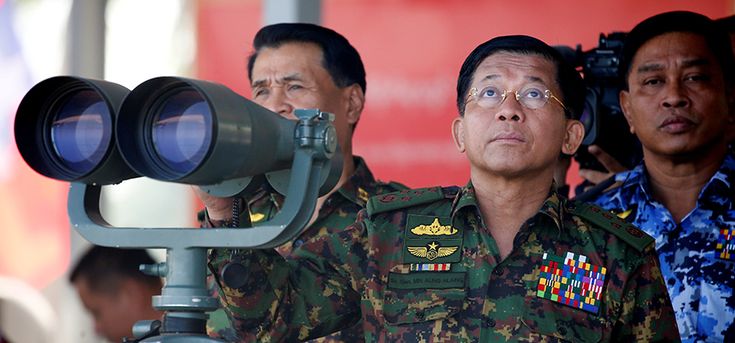
MYANMAR ANNOUNCES COMPULSORY MILITARY SERVICE FOR BURMESE YOUTH

On February 10, 2024, Myanmar’s junta announced that the 2010 People’s Military Service Law would be enforced. The law requires that:

  • Men aged 18 to 35 serve for up to two years
  • Women aged 18 to 27 serve for up to two years
  • Specialists such as doctors aged up to 45 serve for three years
  • “Professional” men and women can be conscripted up to the ages of 45 and 35 respectively

WHY CHINA IS NOT INVADING TAIWAN NOW

Although the People’s Republic of China has never ruled Taiwan, its leaders view the island as Chinese territory—a renegade province that must be brought under Beijing’s control, by force if necessary.

It would be foolish to ignore China’s provocations, for several reasons. With this much hostile hardware moving through narrow lanes of air and water, accidents can happen, and any incident that increases the risk of direct armed conflict between the two most powerful countries on Earth must be taken seriously. Second, China’s maneuvers amount to a rehearsal. Though China will not show Taiwan, the U.S., or anyone else exactly how it would launch a full blockade or invasion of Taiwan, China’s armed forces find it very valuable to practice. After all, Chinese troops haven’t faced a shooting war since a brief conflict with Vietnam in 1979. Finally, Taiwan will hold national elections next year. Though China’s latest intimidation may not lead to military conflict anytime soon, it may have an effect on how Taiwan’s voters imagine the future.

All that said, the actual risk of imminent Chinese military action against Taiwan remains low. Beijing always flexes military muscle when highest-level U.S. and Taiwanese officials meet face to face. Yet, though Speaker McCarthy’s visit with Taiwan’s president marks the highest-level U.S.-Taiwan meeting on US soil since 1979, China’s latest response was less militarily threatening than its reaction to last summer’s visit to Taiwan by then-Speaker Nancy Pelosi – and Beijing is well aware that Washington will notice that.

Read More: An Insider’s Perspective on China’s Strategy in Ukraine

More importantly, Xi is spending considerable energy these days on playing a larger role on the global stage, particularly as a peacemaker. He has offered a 12-point peace plan for Ukraine he hopes will encourage others to see China as a global mediator, even if this particular plan has no chance of success. This past weekend, Xi welcomed French President Emmanuel Macron and European Commission Chairman Ursula Von der Leyen to Beijing for discussion of the Ukraine war and the future of China’s relations with Europe more broadly. Though Xi didn’t promise his European guests to lean harder on Russia, the Chinese and French governments issued a joint statement pledging they would work together to bring Russian and Ukrainian negotiators to the bargaining table.

This follows the remarkable visit to China of the foreign ministers of Middle East rivals Iran and Saudi Arabia, where they agreed under China’s mediation to improve their historically contentious relationship. Most importantly, just days ago, Taiwan’s former president Ma Ying-jeou became the first current or former Taiwanese leader to visit the mainland since Taiwan broke away in 1949, and during his visit he spoke of the “common inheritance of blood, language, history and culture” between the two sides, raising hopes in Beijing that reunification can still be achieved without risking a potentially catastrophic conflict. In short, Xi Jinping wants to be (at least perceived as) a peacemaker, and though Taiwan’s future remains of far more importance to him that any of these issues, China’s president is unlikely to reverse all these diplomatic victories by stumbling into a costly war.

There are more basic reasons why China is unlikely to move against Taiwan soon. Xi has watched carefully as Russia’s President Vladimir Putin has provided a vivid demonstration of just how unpredictable, costly, and humiliating an ill-conceived war can be. Taiwan, backed with generations of sophisticated and powerful American weapons, has been preparing for a possible Chinese invasion even longer than Ukraine has prepped for a full-frontal assault from Russia, and given the complete lack of Chinese combat experience over the past 44 years, Xi understands that the risks of Pyrrhic victory – or even of defeat – are real. At a time when China is emerging from the world’s most draconian lockdown and its worst economic slowdown in decades, Xi is likely to be extra careful about the fights he picks. At least for now.

There’s also the critical issue of semiconductors. About 90 percent of the world’s most sophisticated computer chips are made in Taiwan. Aware of the risk this creates, China, the U.S., and others are working as quickly as possible to lessen the risk of economic catastrophe that would result if that production were dramatically slowed or even halted, but self-sufficiency in chip production is years away for every country. China is loath to risk conflict that would leave its economy without access to the 21st century’s most important economic resource.

One day, China may invade Taiwan, triggering a war with global implications. But that day isn’t soon. When and if it does, the timing will be determined by China’s leader, not as the result of any diplomatic provocation, but by his own calculation of benefit and cost. For now, it’s still possible to hope that cooler heads can one day find a diplomatic solution to avert a war that would have disastrous implications far beyond Asia.

WHY CHINA CAN’T INVADE TAIWAN

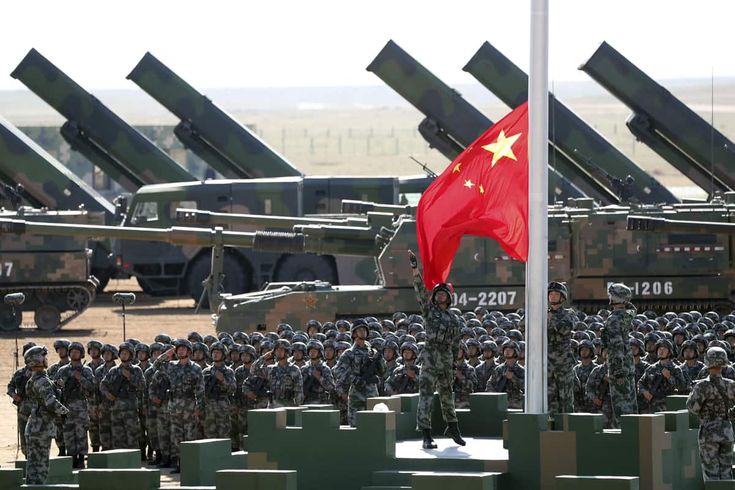
china holding drills .

Invading Taiwan Is Still Too Risky

China officially ended its live-fire military exercises around Taiwan this week, but its Taiwan Affairs Office has issued a white paper emphasizing “peaceful reunification” with the self-ruled island—while reserving the right to use force. It looks like dramatic escalation in response to U.S. House Speaker Nancy Pelosi’s visit to Taiwan can be ruled out, even as aggressive Chinese intrusions across the median line in the Taiwan Strait become the new normal.

In the aftermath of Pelosi’s visit, it’s worth considering just why China doesn’t invade Taiwan, despite near-constant threats to do so. There are a few factors that keep things from kicking off in the Taiwan Strait.

First, there is China’s hope that Taiwan will return to the mainland without war. Polls in Taiwan make that seem like a fantasy: Just 2 percent of Taiwanese identify solely as Chinese, a figure that has fallen from 25 percent a decade ago, thanks to generational change and Beijing’s aggression and crackdowns on human rights. Most of the Taiwanese public holds negative views of the Chinese Communist Party (CCP), and Beijing’s destruction of legal freedoms in Hong Kong turned the “one-country, two systems” principle into a joke.

But it’s possible that Chinese leaders have convinced themselves Taiwan’s return might happen: The white paper paints the Taiwanese public as deceived by the ruling Democratic Progressive Party and the West, and China’s ambassador to Australia has said the polls are misleading. Chinese officials lie about their own system so regularly, they assume that others do the same. Furthermore, the Taiwan Affairs Office also can’t be honest even internally about its own failure to woo Taiwanese to the idea of reunification, because it would expose itself.

Perhaps more likely: The CCP leadership thinks it may be able to force Taiwan to surrender through coercion and subversion rather than outright war. The CCP has spent a lot of time and money building ties with groups in Taiwan, from the once-ruling Kuomintang to organized crime. As I argued last week, Chinese leaders also hold out for the possibility of U.S. collapse, leaving Taiwan without its main protector.

Even if Beijing rules out peaceful reunification, the risks that would accompany an invasion are very high. There is no guarantee of Chinese success if it invades Taiwan, even without direct U.S. intervention. China hasn’t fought an actual war for 43 years, since its failed invasion of Vietnam in 1979; although it has invested heavily in its military, it has had no opportunity to test its doctrine or technologies.

Despite Chinese claims that an invasion would be quick and easy, it would be an amphibious attack of an unprecedented scale against a Taiwanese opponent that has prepared for the scenario for decades—even if it faces its own morale and logistical problems.

Then there are the geopolitical risks of an invasion, most importantly the possibility of full-scale war with the United States. On the one hand, a faction within Chinese military academia genuinely believes invading Taiwan could demonstrate superior will and push the United States out of the Asia-Pacific region. There are certainly questions about how willing Washington would be to go to war and if it could defend Taiwan.

On the other, no one in Beijing wants to suffer a humiliating defeat at the hands of the world’s most powerful military—or for the world to end in nuclear flames.

Putting the United States aside, an invasion of Taiwan would destroy China’s claims that it is a peaceful power—and with them Beijing’s relations with Tokyo, which has strong ties to Taipei. At least at first, a conquered Taiwan could not be sealed off from the world like Tibet or Xinjiang, where atrocities can remain somewhat hidden. Even if China cut off Taiwan’s internet, the island is high-tech enough to get out images of war or occupation that would damage China’s reputation.

Relatedly, an invasion could be followed by an economic recession at home. Southern China’s economy is entangled with Taiwanese suppliers and capital, which would be ruined by a war. Technology firms such as Taiwan Semiconductor Manufacturing Co. have scorched-earth plans in place for their factories in the event of an invasion, and talent would flee wherever possible. The West’s financial muscle exerted over Russia’s war in Ukraine has also caused concern in Beijing, even though extensive sanctions on China would cause much more damage to the global economy.

Finally—and perhaps most potent—is the political risk of invading Taiwan.

Global AI spending forecasts

📊 AI Spending Growth Forecast

  • Global spending on artificial intelligence is projected to reach an estimated $2.53 trillion in 2026 and $3.33 trillion in 2027, according to research firm Gartner. (Yahoo Finance)

💡 What’s Driving the Growth

  • AI infrastructure investments (like data centers and servers) make up a large part of the projected spending — roughly $1.36 trillion in 2026 and about $1.75 trillion in 2027. (Yahoo Finance)
  • Spending will also include software, AI models, data science tools, and services. (Yahoo Finance)

📈 Market Context & Interpretation

  • Some analysts view the continued surge in AI investments as a sign that companies are building long-term technological foundations.
  • Others caution that we may be entering a “trough of disillusionment” where early hype gives way to more cautious spending — similar to past tech trends. (Yahoo Finance)

🧠 What It Means

  • Businesses and tech leaders are pouring capital into AI on a massive scale, focusing especially on infrastructure that supports advanced computing and machine learning.
  • The growth trend suggests AI is becoming a core enterprise and IT priority globally, not just a niche technology. (gartner.com)