HOW TO BE A GAMER

Becoming a gamer isn’t just about mastering controllers or memorizing cheat codes; it’s a journey into a vibrant, immersive world where skill, strategy, and creativity collide. Whether you’re diving into the vast realms of role-playing games, dominating the digital battlefield in shooters, or exploring the pixelated landscapes of indie gems, being a gamer is about more than just playing games – it’s a lifestyle. Here’s a guide on how to embark on this exhilarating journey and thrive in the gaming universe.

First and foremost, immerse yourself in the gaming community. Connect with fellow gamers online through forums, social media groups, or multiplayer platforms. Engage in discussions, share your experiences, and seek advice from seasoned players. The gaming community is incredibly diverse and welcoming, offering a wealth of knowledge and camaraderie to newcomers.

Next, familiarize yourself with different gaming genres. From action-adventure and strategy to simulation and puzzle games, there’s something for every taste and preference. Experiment with various genres to discover what resonates with you the most. Don’t hesitate to step out of your comfort zone and explore new gaming experiences – you might stumble upon hidden gems that ignite your passion for gaming.

Developing gaming skills requires practice, patience, and perseverance. Dedicate time to honing your reflexes, hand-eye coordination, and critical thinking abilities. Whether you’re perfecting your aim in a first-person shooter or mastering complex combos in a fighting game, consistent practice is key to improving your gaming prowess. Embrace challenges and learn from your mistakes – every defeat is an opportunity to grow stronger.

Stay updated on the latest gaming trends, news, and releases. Follow gaming websites, YouTube channels, and social media accounts dedicated to gaming to stay informed about upcoming titles, industry developments, and gaming events. Engage with gaming content creators and influencers to gain insights, tips, and recommendations. Being well-informed allows you to make informed decisions about which games to play and how to enhance your gaming experience.

Invest in quality gaming gear to optimize your gameplay performance. A responsive gaming mouse, a comfortable headset, and a high-resolution monitor can make a significant difference in your gaming experience. Customize your gaming setup according to your preferences and requirements, whether you prefer a minimalist approach or a fully decked-out gaming rig. Additionally, consider joining gaming communities or clubs in your area to connect with fellow gamers and participate in local gaming events and tournaments.

Maintain a healthy balance between gaming and other aspects of your life. While gaming can be incredibly rewarding and enjoyable, it’s essential to prioritize your physical and mental well-being. Take regular breaks, stay hydrated, and engage in physical activity to prevent fatigue and maintain focus during extended gaming sessions. Remember that gaming is just one facet of your life, and it’s essential to cultivate diverse interests and hobbies outside of gaming.

Lastly, embrace the spirit of sportsmanship and camaraderie in gaming. Respect your fellow players, whether you’re competing against them or collaborating with them in cooperative games. Celebrate victories with humility and learn from defeats with grace. Remember that gaming is ultimately about having fun and forging meaningful connections with others who share your passion for gaming.

In conclusion, being a gamer is more than just playing video games – it’s a lifestyle characterized by passion, skill, and community. By immersing yourself in the gaming community, honing your gaming skills, staying informed, optimizing your gaming setup, maintaining a healthy balance, and embracing sportsmanship, you can embark on a fulfilling gaming journey filled with excitement, challenges, and camaraderie. So grab your controller, join the adventure, and let the games begin!


Unleashing the Powerhouse: Exploring AMD Zen Architecture 4.0

Welcome, tech enthusiasts, to our latest blog where we dive into the cutting-edge advancements of AMD’s Zen Architecture 4.0. AMD has been revolutionizing the CPU market with its Zen series, and the latest iteration promises to deliver unprecedented performance, efficiency, and innovative features. Join us as we explore the architecture’s key highlights and understand how it pushes the boundaries of computational power.

  1. Enhanced Core Design:
    AMD Zen Architecture 4.0 introduces a refined core design that optimizes performance across a wide range of workloads. With an increased number of execution units, improved branch prediction, and enhanced front-end capabilities, Zen 4 processors offer a substantial boost in instructions per clock (IPC) performance. This advancement translates into faster single-threaded performance, benefiting tasks that rely on strong single-core performance.
  2. Advanced Process Technology:
    Zen 4 takes full advantage of the state-of-the-art semiconductor manufacturing processes available at the time of its release. With a smaller node size, such as 5nm or even beyond, AMD can pack more transistors within a given area, resulting in improved power efficiency and higher core counts. The refined process technology also allows for higher frequencies, enabling users to experience faster and more responsive computing.
  3. Increased Core and Thread Count:
    AMD Zen 4 architecture raises the bar in terms of core and thread count. Expect to see processors with significantly more cores and threads, ensuring exceptional multi-threaded performance. This increase in core count is particularly beneficial for content creators, professionals in 3D rendering, video editing, and other highly parallel workloads. With Zen 4, AMD aims to redefine the limits of multi-threaded performance.
  4. DDR5 Memory and PCIe 5.0 Support:
    Zen 4 embraces the latest technologies, including support for DDR5 memory and PCIe 5.0. DDR5 memory offers higher bandwidth and increased capacity, allowing for faster data access and improved system responsiveness. Simultaneously, PCIe 5.0 delivers double the bandwidth of PCIe 4.0, enabling faster data transfer between the CPU and other components such as GPUs and storage devices. This results in smoother gaming experiences, reduced loading times, and improved overall system performance.
  5. Advanced Security Features:
    AMD Zen 4 architecture incorporates advanced security features to protect users’ data and enhance system integrity. These features include robust memory encryption, secure boot, and enhanced protection against side-channel attacks. AMD continues to prioritize security, ensuring that users can trust their systems with sensitive information and critical workloads.
  6. Optimized Power Efficiency:
    Zen 4 introduces further optimizations in power efficiency, making it a compelling choice for energy-conscious users. The refined architecture, combined with an advanced manufacturing process, helps reduce power consumption while maintaining excellent performance levels. This improvement benefits not only desktop users but also laptop and mobile devices, where battery life is a critical factor.

Conclusion:
AMD Zen Architecture 4.0 represents a significant leap forward in CPU technology. With its enhanced core design, advanced process technology, increased core and thread count, support for cutting-edge technologies, advanced security features, and optimized power efficiency, Zen 4 empowers users to tackle demanding workloads with ease. Whether you’re a gamer, content creator, or professional seeking top-tier performance, AMD Zen 4 processors are poised to deliver an exceptional computing experience. Get ready to unleash the powerhouse and witness the future of high-performance computing!

P-Cores vs E-Cores & Intel’s New CPUs: What it All Means

Intel’s new Alderlake CPU onwards comes up with new architecture of hybrid cores. Traditionally multi core CPU uses same power cores which doesn’t gives you a good performance.
This is due to the reason the background tasks which needs less CPU time are processed by the high power cores. Mobile technology uses lower power core to handle the background taks which extends the battery life. Intel now implements P-core and E-core concenpt in a single CPU.
P-core is performance core are standard normal CPU core to run heavy duty tasks. This offers Hyper Threading.
E-core is Efficient cores to run back ground tasks.
With 12th Gen Intel CPU core notatins are redefined as below.
A 12 core processor with 8 P-Core and 4 E-core is defiend as 8C4c.

Windows 11 has the patch to make  use of the hybrid CPU architecture efficiently.

Read more about the P-core and E-core in the below article.

Source: P-Cores vs E-Cores & Intel’s New CPUs: What it All Means

Nutanix services: Xtrim – what it is and why it is needed | Nutanix Community

XTrim is a service added by Nutanix AOS 5.10.2 onwards. Nutanix AOS runs on the controller VM and manages the disks.
Xtrim is used to improve the write performance. XTrim uses TRIM command supported by the SSD. Whenever there is a
write on a previously written block, the content will not be erased immediately. On the next write the content is erased.
This causes write performance to degrade as there is an erase operation. TRIM command assist the Operating System to
let the SSD know to wipe the pages of blocks immedeately when a delete command issues by the user or OS.

Below is a short article on the XTrim service and how it works with Nutanix.

Source: Nutanix services: Xtrim – what it is and why it is needed | Nutanix Community

WILL TRUMP DEFEND TAIWAN IF ELECTED PRESIDENT

China said a victory by Donald Trump in the presidential election later this year could lead to the U.S. abandoning Taiwan, comments intended to sow doubt over Washington’s commitment to the island.

“The U.S. will always pursue America first, and Taiwan can change from a chess piece to a discarded chess piece at any time,” Chen Binhua, spokesman for the office in Beijing that handles matters related to the island, said at a regular press briefing on Wednesday.

Chen was responding to a question about an interview Trump gave Fox News in July in which he avoided directly answering a query over whether as president he’d defend Taiwan if China attacked.

“If I answer that question, it’ll put me in a very bad negotiating position,” Trump said at the time. “With that being said, Taiwan did take all of our chip business.”

China frequently suggests that the U.S. isn’t a reliable partner for Taiwan, a line that’s aimed at undermining the island’s confidence that it’ll be able to withstand an invasion. The U.S. has traditionally adopted a policy of strategic ambiguity, acknowledging China’s historical claims to sovereignty over Taiwan, while maintaining only unofficial relations with Taipei and pledging defensive assistance.

Still, President Joe Biden has repeatedly said the U.S. would defend Taiwan if it came under attack. Washington is Taipei’s main military supporter, and in late 2022 it authorized as much as $10 billion in weapons sales to Taiwan over five years.

Beijing has responded to the weapons sales by hitting defense firms with largely symbolic sanctions. China has vowed to bring the democratically run island of 23 million people under its control someday, by force if that’s what it takes.

When asked about Chen’s remarks, a spokesman for Trump’s campaign referred to comments he made while president that acknowledged China was a security threat.

The spokesman also pointed to a precedent-breaking conversation that Taiwan President Tsai Ing-wen had with Trump when he was president-elect in 2016. The call was the closest a Taiwanese leader has come to getting formal U.S. recognition since Washington established relations with the Communist government in Beijing some four decades ago.

The U.S. and China fought a trade war during Trump’s term, when ties between the nations frayed over a range of issues, including the origins of the coronavirus, espionage, technology and human rights.

China has maintained its pressure on Taiwan since the island elected the U.S.-friendly Vice President Lai Ching-te as its next leader on Jan. 13. Days afterward, Beijing peeled off one of Taiwan’s few remaining diplomatic allies, Nauru, and its ties with another Pacific ally, Tuvalu, are at risk after an election there.

On Tuesday, China changed a civil aviation route without consulting Taiwan, which lodged what it said was a “strong protest” with Beijing. The move essentially normalizes the flight of Chinese civilian aircraft closer to the island. 

The People’s Liberation Army regularly sends sorties of warplanes into sensitive zones around Taiwan, and has held major military exercises around the island twice since August 2022 because Tsai met top U.S. lawmakers.

Chen, the spokesman for the Taiwan office in Beijing, said the aviation change was “within regular work scope of China civil aviation regulator.” He also reiterated Beijing’s stance that “Taiwan is an integral part of China’s territory.”

biden saying us would defend taiwan militarily if china uses force.

RECIPE FOR MAKING A chinese chicken chopseuy

Chicken Chop Suey is a delicious and versatile Chinese stir-fry dish with a variety of vegetables. Here’s a recipe for making Chinese Chicken Chop Suey:

Ingredients:

For the Chicken Marinade:

  • 1 pound (450g) boneless, skinless chicken breast, thinly sliced
  • 2 tablespoons soy sauce
  • 1 tablespoon oyster sauce
  • 1 tablespoon cornstarch
  • 1 teaspoon sesame oil
  • 1/2 teaspoon black pepper

For the Stir-Fry:

  • 2 tablespoons vegetable oil
  • 2 cloves garlic, minced
  • 1 tablespoon ginger, grated
  • 1 onion, thinly sliced
  • 1 carrot, julienned
  • 1 bell pepper, thinly sliced (you can use a mix of colors)
  • 1 cup broccoli florets
  • 1 cup snap peas, trimmed
  • 1 cup cabbage, thinly sliced
  • 1/2 cup bamboo shoots, sliced (optional)
  • 1/4 cup soy sauce
  • 2 tablespoons oyster sauce
  • 1 tablespoon cornstarch mixed with 2 tablespoons water (for thickening)
  • Green onions, chopped (for garnish)
  • Cooked rice or noodles (for serving)

Instructions:

Marinate the Chicken:

  1. In a bowl, combine the sliced chicken with soy sauce, oyster sauce, cornstarch, sesame oil, and black pepper. Mix well and let it marinate for at least 15-20 minutes.

Stir-Frying:

  1. Heat vegetable oil in a wok or large skillet over medium-high heat.
  2. Add the marinated chicken to the hot wok and stir-fry until it’s cooked through and lightly browned. Remove the chicken from the wok and set it aside.
  3. In the same wok, add a bit more oil if needed. Sauté minced garlic and grated ginger until fragrant.
  4. Add the sliced onion, julienned carrot, and bell pepper. Stir-fry for a couple of minutes until the vegetables begin to soften.
  5. Add broccoli florets, snap peas, cabbage, and bamboo shoots (if using). Continue to stir-fry for another 3-4 minutes until the vegetables are crisp-tender.
  6. Return the cooked chicken to the wok with the vegetables and toss everything together.
  7. In a small bowl, mix soy sauce and oyster sauce. Pour the sauce over the chicken and vegetables, tossing to combine.
  8. In a separate small bowl, mix cornstarch with water to create a slurry. Add the slurry to the wok, stirring continuously until the sauce thickens.
  9. Garnish with chopped green onions and toss once more to combine.
  10. Serve the Chicken Chop Suey over cooked rice or noodles.

Enjoy your homemade Chinese Chicken Chop Suey!

RECIPE FOR DEER CURRY

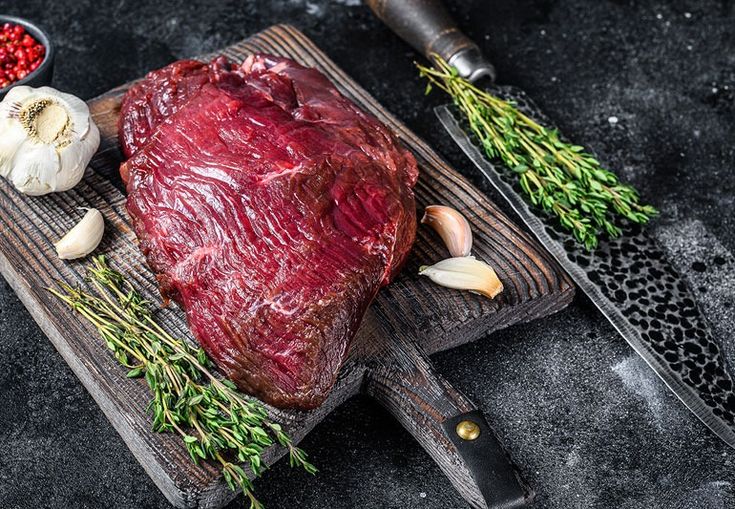
deer meat

Here’s a recipe for making Deer Curry:

Ingredients:

For the Marinade:

  • 1 1/2 pounds (680g) deer meat, cut into bite-sized pieces
  • 1 cup plain yogurt
  • 1 tablespoon ginger-garlic paste
  • 1 teaspoon ground turmeric
  • 1 teaspoon chili powder
  • 1 teaspoon ground coriander
  • Salt, to taste

For the Curry:

  • 2 tablespoons vegetable oil
  • 2 onions, finely chopped
  • 2 tomatoes, chopped
  • 1 tablespoon tomato paste
  • 2 teaspoons curry powder
  • 1 teaspoon ground cumin
  • 1 teaspoon ground coriander
  • 1 teaspoon garam masala
  • 1/2 teaspoon chili powder (adjust to taste)
  • Salt, to taste
  • 1 cup water
  • Fresh cilantro, chopped (for garnish)

Instructions:

Marinating the Deer:

  1. In a large bowl, combine the yogurt, ginger-garlic paste, ground turmeric, chili powder, ground coriander, and salt.
  2. Add the deer meat pieces to the marinade, ensuring they are well-coated. Cover the bowl and let it marinate for at least 2-3 hours or preferably overnight in the refrigerator.

Cooking the Deer Curry:

  1. Heat vegetable oil in a large, heavy-bottomed pan over medium heat.
  2. Add chopped onions and sauté until they become golden brown.
  3. Stir in the chopped tomatoes and tomato paste. Cook until the tomatoes are soft and the oil begins to separate from the mixture.
  4. Add curry powder, ground cumin, ground coriander, garam masala, chili powder, and salt. Cook for a couple of minutes to toast the spices.
  5. Add the marinated deer meat along with the marinade. Cook for about 5-7 minutes, allowing the meat to brown.
  6. Pour in water, cover the pan, and let it simmer on low heat for about 45-60 minutes or until the deer meat is tender. Stir occasionally and add more water if needed.
  7. Once the meat is cooked, check for seasoning and adjust salt and spice levels according to your taste.
  8. Garnish the deer curry with chopped fresh cilantro.

Serve the deer curry hot with rice, naan, or your choice of bread.

Enjoy your flavorful Deer Curry!