the war started on oct. 7 when hamas and islamic jihad sent around 1000 fighters into israel who killed 1,200 israelis.
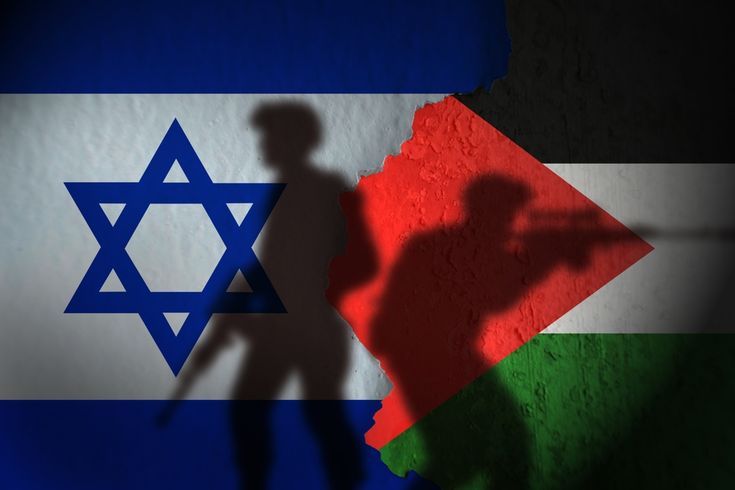
one of the flags showing resistance against israel’s occupation.(of west bank and gaza)
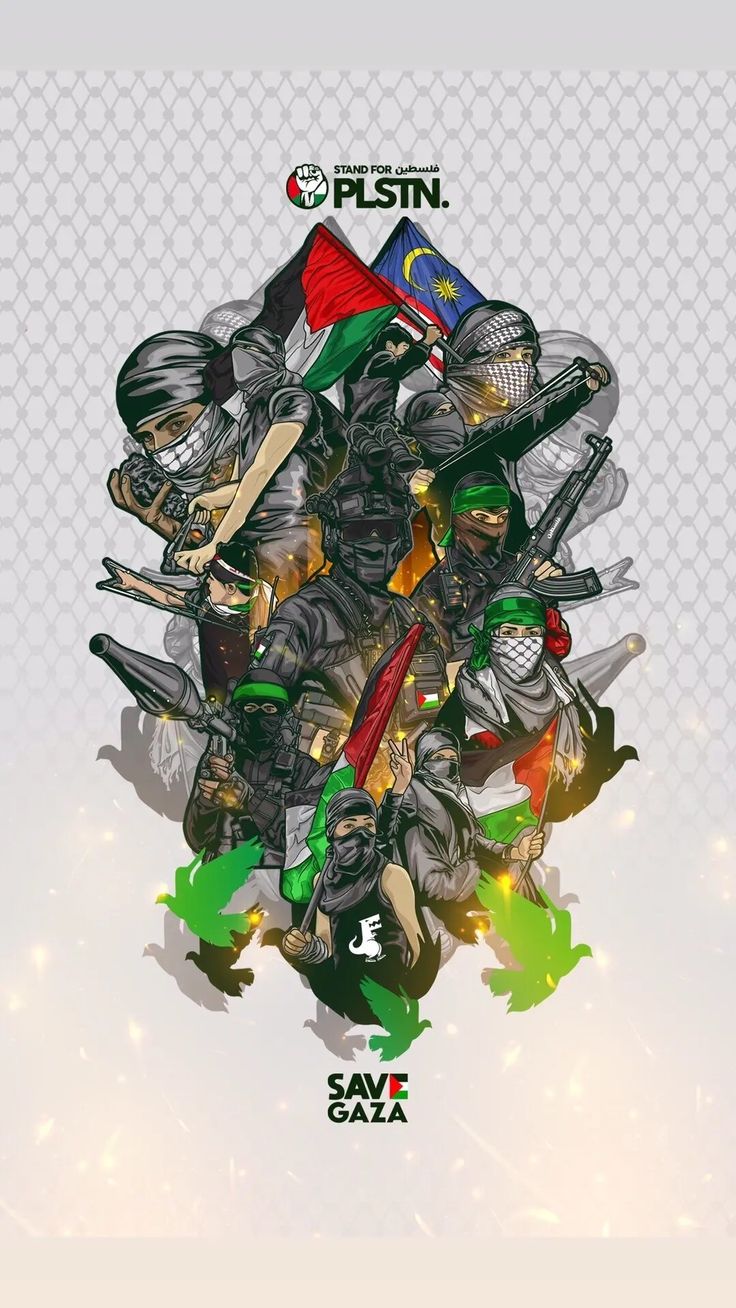
this is also one of the posters after israeli invasion of gaza.
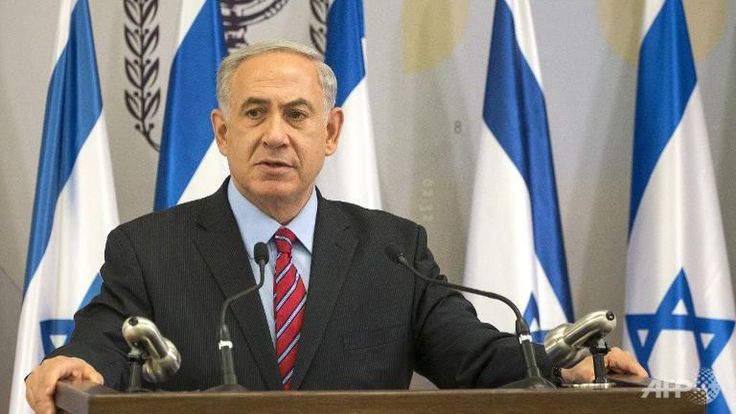
israeli prime minister benjamin netanyahu announces war against hamas.
for knowing more about this war we must know about hamas
PALESTINIAN LIBERATION ORGANISATION(PLO)
The Palestine Liberation Organization (PLO; Arabic: منظمة التحرير الفلسطينية Munaẓẓamat at-Taḥrīr al-Filasṭīniyyah) is a Palestinian nationalist coalition that is internationally recognized as the official representative of the Palestinian people.
Founded in 1964, it initially sought to establish an Arab state over the entire territory of the former Mandatory Palestine, advocating the elimination of the State of Israel. However, in 1993, the PLO recognized Israeli sovereignty with the Oslo I Accord, and now only seeks Arab statehood in the Palestinian territories (the West Bank and the Gaza Strip) that have been militarily occupied by Israel since the 1967 Arab–Israeli War.
ORGINS OF HAMAS(HOW A CHARITY GROUP TURNED INTO A TERRORIST GROUP)
Hamas, militant Palestinian nationalist and Islamist movement in the West Bank and Gaza Strip that is dedicated to the establishment of an independent Islamic state in historical Palestine. Founded in 1987, Hamas opposed the secular approach of the Palestine Liberation Organization (PLO) to the Israeli-Palestinian conflict, rejected attempts to cede any part of Palestine, and embraced the use of violence, including acts of terrorism, as a means to achieve its goals.
The Gaza War, also known as Operation Cast Lead (Hebrew: מִבְצָע עוֹפֶרֶת יְצוּקָה),also known as the Gaza Massacre (Arabic: مجزرة غزة), and referred to as the Battle of al-Furqan (معركة الفرقان) by Hamas, was a three-week armed conflict between Gaza Strip Palestinian paramilitary groups and the Israel Defense Forces (IDF) that began on 27 December 2008 and ended on 18 January 2009 with a unilateral ceasefire. The conflict resulted in 1,166–1,417 Palestinian and 13 Israeli deaths. Over 46,000 homes were destroyed in Gaza, making more than 100,000 people homeless.
A six month long ceasefire between Israel and Hamas ended on 4 November, when the IDF made a raid into Deir al-Balah, central Gaza to destroy a tunnel, killing several Hamas militants. Israel said the raid was a preemptive strike and Hamas intended to abduct further Israeli soldiers,[37][38] while Hamas characterized it as a ceasefire violation,[37][39] and responded with rocket fire into Israel.[40][41] Attempts to renew a truce between Israel and Hamas were unsuccessful. On December 27, Israel began Operation Cast Lead with the stated aim of stopping rocket fire.[42][43] In the initial air assault, Israel attacked police stations, military targets including weapons caches and suspected rocket firing teams, as well as political and administrative institutions, striking in the densely populated cities of Gaza, Khan Yunis and Rafah.[44] After hostilities broke out, Palestinian groups fired rockets in retaliation for the aerial bombardments and attacks.[45] The international community considers indiscriminate attacks on civilians and civilian structures that do not discriminate between civilians and military targets as illegal under international law
An Israeli ground invasion began on 3 January. On 5 January, the IDF began operating in the densely populated urban centers of Gaza. During the last week of the offensive (from 12 January), Israel mostly hit targets it had damaged before and struck Palestinian rocket-launching units.[49] Hamas intensified its rocket and mortar attacks against mostly civilian targets in southern Israel, reaching the major cities of Beersheba and Ashdod for the first time during the conflict.[50][51][52] Israeli politicians ultimately decided against striking deeper within Gaza amid concerns of higher casualties on both sides and rising international criticism.[citation needed] The conflict ended on 18 January, when the IDF first declared a unilateral ceasefire, followed by Hamas’ announcing a one-week ceasefire twelve hours later.[6][7] The IDF completed its withdrawal on 21 January.[53]
In September 2009, a UN special mission, headed by the South African Justice Richard Goldstone, produced a report accusing both Palestinian militants and the Israeli army of war crimes and possible crimes against humanity, and recommended bringing those responsible to justice.[54] In 2011, Goldstone wrote that he does not believe that Israel intentionally targeted civilians in Gaza as a matter of explicit policy.[55] The other authors of the report, Hina Jilani, Christine Chinkin, and Desmond Travers, stated that no new evidence had been gathered that disputed the report’s findings.[56][57] The United Nations Human Rights Council ordered Israel to conduct various repairs of the damages. On 21 September 2012, the United Nations Human Rights Council concluded that 75% of civilian homes destroyed in the attack were not rebuilt
| Date27 December 2008 – 18 January 2009 (3 weeks and 1 day)LocationGaza Strip and Southern IsraelResultIsraeli military victory[2][3][4][5]IDF declared unilateral ceasefire, 12 hours later Hamas announced a one-week ceasefire.[6][7]Humanitarian crisis and deterioration of infrastructure and basic services in Gaza.[8]Number of rockets being fired from Gaza reduced.See results | |
| Belligerents | |
|---|---|
| IsraelIsrael Defense ForcesIsrael Security Agency |  Gaza Strip[1]  HamasIzz ad-Din al-Qassam  Popular Front for the Liberation of PalestineAbu Ali Mustapha Brigades  Islamic Jihad Movement in PalestineAl-Quds Brigades FatahAl-Aqsa Martyrs’Popular Resistance Committees |
| Commanders and leaders | |
| Ehud Olmert Prime Minister Ehud Barak Minister of Defense Gabi Ashkenazi Chief of General Staff Yoav Galant Southern Command Ido Nehoshtan Air Force Eli Marom Navy Eyal Eisenberg Gaza Division Yuval Diskin Internal Security Service | Khaled Mashal[9] Ismail Haniyeh Said Seyam † Mohammed Deif Abu Zakaria al-Jamal † Ahmed Jabari Tawfik Jaber †[10] Osama Mazini Nizar Rayan †[10] Mahmoud al-Zahar Ramadan Shallah |
| Strength | |
| IDF: 4,000[11]–20,000[12] deployed in ground invasion and tens of thousands of reservists mobilized[13] (176,000 total active personnel)[14] | Hamas (Izzedine Al-Qassam Brigades and paramilitary police): 20,000 (est. total)[15][16] Other Palestinian paramilitary forces: 10,000[17] |
| Casualties and losses | |
| Total killed: 13 Soldiers: 10 (friendly fire: 4)[18] Civilians: 3 Total wounded: 518 Soldiers: 336[19] Civilians: 182[19] | Total killed: 1,166–1,417[fn 1]Militants and police officers: 491* (255 police officers, 236 fighters) (PCHR),[22][23] 600* (B’Tselem),[21] 709 (IDF),[20] 600–700 (Hamas)[24] Civilians: 926 (PCHR),[22] 759 (B’Tselem),[21] 295 (IDF)[20] Total wounded: 5,303 (PCHR)[22]Total captured: 120 (IDF) |
| One Egyptian border guard officer killed and three wounded, and two children wounded.[25][26] Over 50,800 Gaza residents displaced.[27]Over 4,000 homes destroyed; around $2bn worth of damage to Gaza[28] | |
| *255 (PCHR)[22] or 265 (B’Tselem)[21] police officers were killed. | |
| table imported from wikipedia |
|---|
IRAN INVOLVEMENT
The Islamic Republic of Iran is a key patron of the Palestinian militant organization Hamas, which has controlled the Gaza Strip since 2006. Iran provides Hamas with funds, weapons, and training.
According to a 2020 U.S. State Department report, Iran provides about $100 million annually to Palestinian militant groups, including Hamas. As of 2023, according to an Israeli security source, Iran had significantly increased its funding for Hamas to $350 million a year.
OCTOBER 7 ATTACKS (OPERATION AL-AQSA FLOOD)
At around 6:30 a.m. Israel Summer Time (UTC+3) on Saturday, 7 October 2023, Hamas announced the start of the operation, which it called Operation Al-Aqsa Flood. Hamas commander Mohammed Deif, in an audio message, declared the operation was “to end the last occupation on Earth”.eif said the attack was in response to the 16-year blockade of Gaza, Israeli incursions in West Bank cities, violence at Al-Aqsa mosque, and Israeli settler violence.[91] Shortly thereafter, Hamas Prime Minister Ismail Haniyeh made a similar announcement in a televised address.
Deif said more than 5,000 rockets had been fired from the Gaza Strip into Israel in a span of 20 minutes at the start of the operation. Israeli sources reported the launch of 3,000 projectiles from Gaza, killing five. Explosions were reported in areas surrounding Gaza and in the Sharon Plain, including Gedera, Herzliyya, Tel Aviv, and Ashkelon. Air raid sirens were activated in Beer Sheva, Jerusalem, Rehovot, Rishon Lezion, and Palmachim Airbase. Hamas issued a call to arms, with Deif calling on “Muslims everywhere to launch an attack”.
Palestinian militants also opened fire on Israeli boats off the Gaza Strip, while clashes broke out between Palestinians and the Israel Defense Forces in the eastern section of the Gaza perimeter fence. In the evening Hamas launched another barrage of about 150 rockets towards Israel, with explosions reported in Yavne, Givatayim, Bat Yam, Beit Dagan, Tel Aviv, and Rishon Lezion.
Soon after the start of the Hamas operation, there were reports that many civilians and soldiers had been taken as captives back to the Gaza Strip. Later in the day Hamas announced it had captured enough Israeli soldiers to force a prisoner swap,[194] and Israel confirmed hostages had been taken.[195]
In Be’eri, up to 50 people were taken hostage; after an 18-hour standoff between militants and IDF forces, they were freed.[196] Hostages were also reported taken in Ofakim, where policemen led by Chief Superintendent Jayar Davidov engaged Palestinian militants in a shootout;[when?] Davidov and three of his men were killed, and the IDF later rescued two Israeli hostages in the suburb of Urim.[196] There were reports of militants killing and stealing family pets.[197]
Hamas took many hostages back to Gaza. On 16 October, they said they were holding 250 hostages[198] and that it had done so to force Israel to release its Palestinian prisoners.[199] Some of the hostages, including three members of the Bibas family, were subsequently handed over to other militant groups. Palestinian Islamic Jihad ended up holding at least 30 of the hostages, but it is unclear whether they or Hamas originally kidnapped them.
According to Ariel Merari, the raiders “were ordered to kidnap as many [people] as possible… [and] they intentionally kidnapped a populace that is sensitive from the aspect of Israeli public opinion”.[200] Merari doubts that Hamas will agree to releasing all of the hostages in “one go” regardless of how many of its prisoners are released, since the hostages are its only guarantee against complete destruction at Israel’s hands.[200] He believes Hamas will try to force a ceasefire and protract the release for weeks or months, until an Israeli offensive is no longer seen as viable
RUSSIA
Russia has diplomatic relations with the political wing of Hamas, the Palestinian Islamist organization which rules the Gaza Strip. Russia has not designated Hamas as a terrorist organization, though it has condemned Hamas attacks as “terrorism” and has taken a hard line against Islamist terrorism. Russia has also maintained relations with Israel.
INDIA REACTION
india has condemned the october 7 attacks and so did china.
US BENEFITS ON WAR
US has benefitted a lot from the war with israel buying lots of weapons from usa.



 Jabhat Fath al-Sham (2016–2017)


 Basil Zamo
 Abu Rida al-Turkistani


